UK manufacturers are under pressure from all sides. On the one hand, they need to decarbonise to meet government targets…
UK manufacturers are under pressure from all sides. On the one hand, they need to decarbonise to meet government targets and on the other, they need to keep operational costs low amid volatile energy prices.
Upgrading their heating processes is one of the most common ways of tackling both issues, but many rush in when selecting a solution without fully considering the potential short- or long-term negative impact an ill-advised upgrade could have directly or indirectly on their current production capabilities and future goals. Here, Ross Docherty, Director at Protech, explains the key considerations manufacturers need to be aware of before upgrading heat generation plant rooms.
How to approach boiler plant room upgrades?
It can be easy for manufacturers to approach HVAC providers after they’ve already made up their minds on the product they want to upgrade to. But in very few cases do manufacturers fully consider the scale and complexity of the challenge when it comes to upgrading plant room equipment.
Before discussing the potential options with customers, we spend a great deal of time – often more than expected – analysing the needs, desires and future plans of manufacturers, including talking to all relevant stakeholders – from plant room managers to production leads. This is because, while upgrading a piece of HVAC equipment might seem like an isolated procedure, the reality is often far from this. We also always consider the reasons for upgrading. Is it a case of run-to-fail and you need a replacement system, or are you looking for a low carbon upgrade to reduce carbon emissions in response to supply chain or legislative pressure? The reasons for upgrading will tell us what you want out of the switch and give a clear picture of priorities and aims.
Our teams take the time to analyse every aspect of a manufacturer’s business. Who works there? Are there any mobility issues? How do people move around the site? We ask these questions because, regardless of size, every business will often experience site disruption when plant room equipment is being upgraded. It’s our job to make sure this doesn’t negatively impact production.
For example, it might work better if the upgrade is pushed back until later in the year when a planned factory shutdown is scheduled. This removes excessive disruption and makes the process smoother for everyone. These are just a handful of the considerations that we uncover through the consultation process and many are often unique to each manufacturer.
Why are some industries more difficult to decarbonise?
We understand that many energy-intensive manufacturers are skeptical about switching heating equipment because it plays such a critical role in their production processes. However, businesses also cannot afford to fall behind as low carbon energy becomes more affordable and easier to integrate.
Take the whisky distillery industry, for example. The production process is enormously energy-intensive and requires a vast amount of heat. So, it’s understandable that the move to renewables and low carbon fuels is a huge undertaking for manufacturers.
While a small number of producers have already embarked on this journey through various decarbonisation initiatives, the majority are hesitant to change production processes out of fear that it might affect the quality of their product.
After all, moving from traditional oil and gas boilers to distil the whisky can have consequences for the entire process. Hydrogen, for example, has a different flame temperature and flame speed when compared to oil and gas, so this would need to be tried and tested to ensure product consistency.
Ultimately, the compatibility of low carbon upgrades is something which must be factored into a manufacturer’s existing operations. If not, it could lead to costly mistakes, fines and unwanted downtime.
How do you de-risk boiler plant room upgrades?
By understanding concerns and looking at solutions first, rather than results, manufacturers can eliminate a lot of the risk that comes with upgrading plant room equipment. It also doesn’t matter what budget you are working with. Our teams look to provide a solution that fits the amount you are willing to spend. This might not mean a full upgrade, but it could mean a phased approach to implementing equipment which allows you to futureproof your plant room when future greener fuels and fully renewable solutions become more accessible.
Contact our team today to discuss how we can support your boiler plant room upgrade.
Key takeaways:
- Before making any decision on HVAC upgrades, it is important for manufacturers to consider how any changes will affect their entire production process, beyond just the plant room
- Changing the heat source for a lower carbon alternative may impact the product quality, so ensure you conduct thorough tests before committing to any changes
- Spread potential upgrades over multiple phases if budget is a concern
Contact our team today to discuss how we can support your boiler plant room upgrade.
Key takeaways:
- Before making any decision on HVAC upgrades, it is important for manufacturers to consider how any changes will affect their entire production process, beyond just the plant room
- Changing the heat source for a lower carbon alternative may impact the product quality, so ensure you conduct thorough tests before committing to any changes
- Spread potential upgrades over multiple phases if budget is a concern
AC’s New Frontier: Heating in Commercial Properties
Article
4 min read
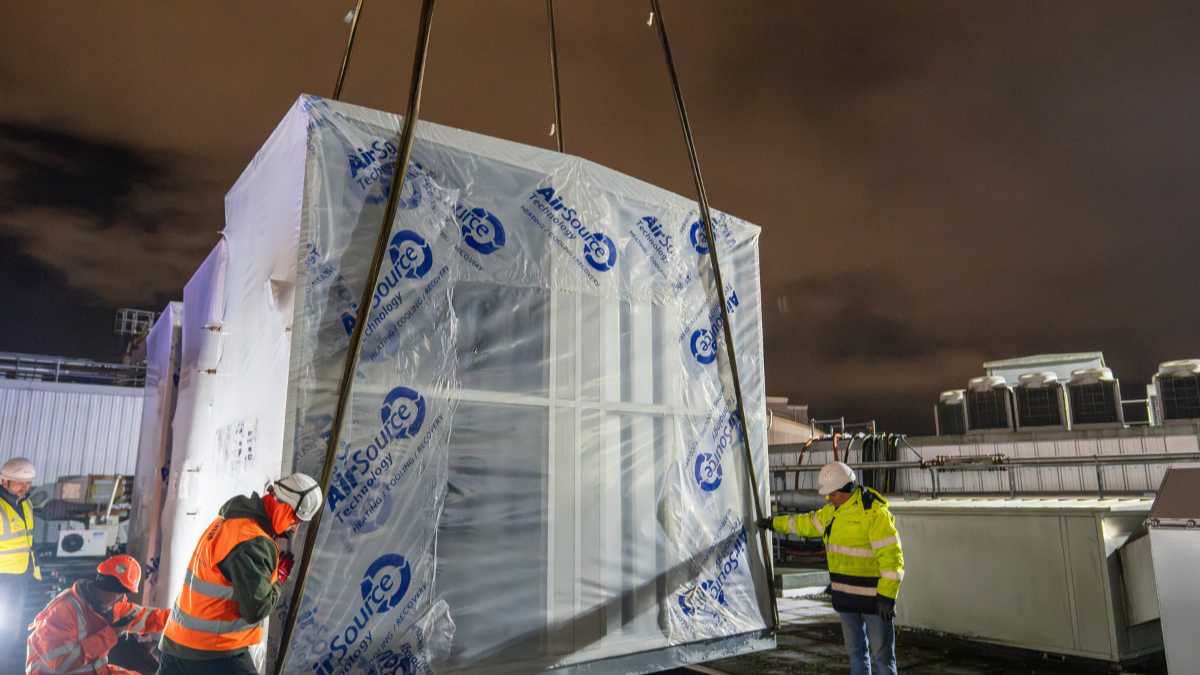
Heating up, cooling down Air conditioning (AC) use in non-domestic UK buildings, including offices and retail spaces, has been gradually...
What to expect from changes to commercial MEES in 2025
Article
4 min read
The Minimum Energy Efficiency Standards (MEES) play a critical role in governing the environmental performance of commercial properties in the...